
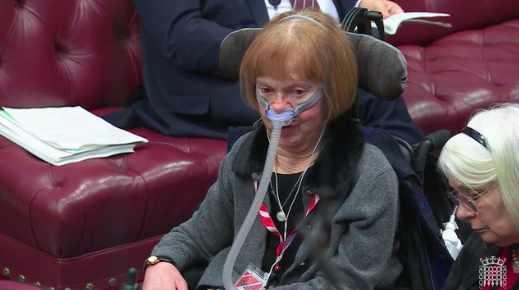
As we gather to debate the final allotted days of Committee on the Terminally Ill Adults (End of Life) Bill, I have found myself reflecting on what we have achieved from the hours of diligent scrutiny over 14 weeks. The debates do not make for easy reading, nor should they considering its monumental nature. A law which will permit state sanctioned assisted deaths for some of its citizens will fundamentally reshape society’s understanding of autonomy, protection, and the value of human life.
This weighs heavily on me as I keep returning to one central question: what will this legislation mean in practice for people like me—for disabled people, for those who already feel vulnerable to its potential reach, and for those whose voices are too often overlooked?
“Don’t worry” my friends say, “the Bill is out of time” but I know it will be back, as it has done repeatedly over the 22 years I have been involved in its scrutiny. Those of us who plead for caution, extra safeguards and regard for unintended consequences are told we are obstructive to the point of filibustering. I know to my core that making it safe in practice requires reliable evidence, forensic attention to detail and yes, time. If we are being accused of doing our job diligently, then I am happily guilty.
What I love about the House of Lords, is the expectation that we thoroughly research and evidence our contributions. Legislation is complex and must pass the appropriate public safety test when operating in real-world conditions. It is not a theoretical puzzle to be solved on paper – it needs to work in the messiness and unpredictability of life. The time being taken on this private members Bill, reflects the weight of the responsibility, not an attempt to delay it.
Central to our exchanges is the idea of choice. Of course, choice matters. I have fought my entire life for disabled people to enjoy the same choices and rights as everybody else. Control at the end of life matters to all of us. But I have been asking what “choice” truly means in the context in which many people live, throughout the passage of the bill to date. Can a decision ever be entirely free if it is shaped—however subtly—by feelings of being a burden, by unequal access to care, or by the attitudes of those around us?
This is why I have supported amendments to ensure that assisted dying is never raised first by a clinician. For me, this is not a small procedural detail. It goes to the heart of autonomy. When a doctor introduces the option of assisted death, it is not a neutral act. It can shift the entire conversation, particularly for someone who may already feel that their life is of lesser value.
I know, from decades of listening to and working alongside disabled people, that these pressures are real. They are not always spoken aloud, and they are rarely intentional, but they exist. And when they exist, they shape decisions.
That is why I believe so strongly that if this law is to proceed, it must draw a clear ethical boundary: the choice must come from the individual, and from the individual alone. And their choice must take place in an environment of other genuinely available choices at the end of life. Like palliative care, social care and support, or excellent healthcare in the community or in hospital.
I have also spent time during Committee probing the safeguards within the Bill which allow for genuine choice at the end of life. On paper, many of them appear robust. But as I have said, legislation does not operate on paper—it operates in the real world. And the real world is messy and sometimes hostile, even between families. Our health and care systems are under strain. Support is not equally available to all. People’s experiences vary widely depending on where they live and what resources they have.
So I have questioned: will these safeguards still hold in those circumstances? Will they work not just in ideal conditions, but in the imperfect reality we know exists?
For me, this cannot be separated from the broader context in which this Bill sits. We are debating assisted dying at a time when many disabled people are still fighting for adequate care, for supported independence, and for human rights to be treated with respect and dignity. That context matters. It shapes how choices are experienced and understood.
Trust is another issue I have returned to repeatedly. Trust in the healthcare system is fundamental. Disabled people above all, have repeated encounters with healthcare professionals throughout their lives. We are reliant on their skills and willingness to do their very best for us, otherwise we flounder. For some disabled people, that trust has been broken again and again — the Pandemic being the worst example of prejudice and discrimination, driving practice. We felt unsafe because we were unsafe. Therefore surely we must ask ourselves honestly: how will the introduction of assisted dying affect that already tenuous trust? Will everyone feel equally valued? Will everyone feel safe?
I want to be clear: I do not dismiss the arguments of those who support this Bill. I recognise the suffering that can accompany terminal illness. I understand the desire for control and relief from pain. But my role in this debate has been to ensure that the perspectives of those who fear the unintended consequences are not lost. Such fears are not baseless. They are grounded in lived experience.
Committee Stage is where Parliament does its most detailed work and to all intents and purposes it’s best work. I have tried to approach it in that spirit—carefully, constructively, and with a focus on what this legislation will actually do in practice. Not just what it intends, but how it will operate when it meets the complexity of people’s lives. This legislation cannot be passed on principal alone. We must all be sure that the legislation when enacted, protects the majority whilst serving the very few. If one person dies for whom this bill is not intended, we have failed as parliamentarians.
During this bill I hope those participating have understood just how important it is to ensure autonomy is real, not assumed. We must be honest about the society in which this law will take effect, not one portrayed in Hollywood movies, like Jojo Moyes, Me Before You.
Ultimately, this debate is not only about how people may choose to die. It is about how we value life until death. This is especially pertinent for the lives of those who may too easily be seen as less than. That is what continues to guide me through the challenges raised by this legislation. It’s what I believe must remain at the centre of any law which prematurely assists the death of another in the name of choice and autonomy.
Recent Comments